Wednesday, 8 February 2012

Textual Analysis of Teaser Trailer - Titilope


                        Textual Analysis: Movie Trailer – “2012”.


 Film Title: 2012

Year Of Release: November 11 2009

Director: Roland Emmerich

Producer: Roger Binbaun
                    Brian Grazer
                    Harald Kloer
                    Mark Gordon
                    Larry J. Franco
                    Ryan Kavanagh

Certificate Rating: PG-13

Production Company: Emmerich’s Production Company

Actors: John Cusack
              Chiwetel Ejiofor
              Amanda Peet
              Oliver Platt
              Thandie Newton
              Danny Glover
              Woody Harelson

Length of Trailer: 2:22

Distributed by: Columbia Pictures

Country: United States of America

Budget: $200 Million

Running Time: 158 minutes

Genre: Science Disaster Film

Synopsis: 
The trailer opens up with a caption “The Mayan calendar predicted it” which suggests that the Mayans had predicted the exact year that the disaster will occur. The Maya is a Mesoamerican civilization that is mostly known for its art, architecture, Mathematical and Astronomical systems. This causes the audience to question whether this kind of disaster will happen in reality. The non-diegetic music is ‘eerie’; it sets the feeling of suspense in the mind of the audience.


When the geologist Dr. Adrian Helmsley and his team discover that the core of Earth is heating due to solar radiation, he advises the North American President about his findings. The American Govern collects money from the worldwide leaders to build arks to save them with necessary people to rebuild civilization. Meanwhile, the unsuccessful writer Jackson Curtis discloses that the world is near to end and tries to save his son and his daughter from the tragic end.
·         Location: There are some features in the trailer that suggest the movie is located at the United States of America; the movie is located at Los Angeles.  For example, there is a scene that shows the ‘President’ (Danny Glover) speaking directly to the citizens through an electric billboard about 2012 being the end of the world. The features also include Yellow taxis; the way the houses are built; the cities and the tall buildings.
·         Characters: The characters that are portrayed in the trailer are a father and a daughter/ struggling writer, his ex-wife, the citizens in the country, the President presenting a speech to his nation, Priests, Christians, Teenagers who are  about to sail but are held back by the large crack in the ground, Fire-fighters, A Science Conspiracy Theorist/Radio talk show host. The representation of the characters fit the theme of the movie which is a ‘Scientific disaster’. Especially because the character that tries to alert the nation of the oncoming danger. This is because, things like this happen currently in society with people who sometimes try to raise alerts but they either get ignored or rejected from their communities. They are seen as outcasts so they isolate themselves.
·         Pacing: At the beginning of the trailer, the pacing and the captions are slow. This builds tension in the minds of the audience. However, when the buildings, houses and roads begin to crash, the suspense increases. It causes them to question if what they see will truly happen or not. When the background music is introduced towards the end of the trailer, the action quickens till the title of the movie is quietly introduced to the audience. Then there is a fade to black at the end.

In conclusion, after analysing the various elements of this trailer, I have realised and understood a lot of things. Firstly, editing can be difficult because there are a number of things to be considered about the lengths and order of shots.. The trailer is the ain thing that creates the desire in the minds of people to watch the movie so it has to grab the attention of it’s audience. Camera angles, shots and captions must be taken seriously.
Further-more, I have also come to realise that, a trailer or a teaser dosent have to give away so much information about the movie; it is only made to give them an idea. Trailers include a series of selected shots from the film that is being promoted.  


Planning and Research - Going to Pieces :The rise and the fall of Slasher film - Martin

This is a film documentary that talks about how horror came into prominence and how also it has declined, it looks like many clips from different horror films focusing on slasher films in particular. there is also comments about the film directors, writers and producers on the time line of slasher films and it also presents the history of  horror films and what films have made the sub genre successful and entertaining. Our group found this very interesting and in particular a comment from John Carpenter who is the writer, director of Halloween stood out to me, 'theres a blood lust in all of us....... and it kills....... and it doesn't care' it adds a real sense of evil in the world.


Here's the trailer to the film documentary:


Update 08/02/2012

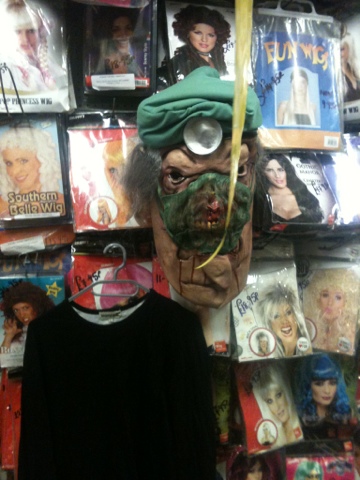
Today we visited the store harlequins which was a valuable erxperience as we were able to purchase the make up items that we need for our project. We would also say it was a success as we found what we were looking for which was blood, fake skin and other props to create our characters involved in our Horror project.

Monday, 30 January 2012

Update 30/01/2012

Today we continued to cut pieces of our teaser trailer using final cut and also designing our logo, we also arranged a trip to a make up shop in Lee High Road called Harlequins to help us with our research in different make up techniques.


Thursday, 26 January 2012

Planning And Research: Film Poster - Martin

 A movie poster is a poster used to advertise a film. Studios often print several posters that vary in size and content for various domestic and international markets. they normally contain an image with text. Today the film posters will usually feature a photograph of the main actor however prior to the 1990s, illustrations instead of photos were far more common. The text on movie posters usually contains the film title in large lettering and often the names of the main actors. They may also include a tag line, name of the director, names of characters, the release date etc.

The Dark Knight Film Poster featuring the main characters


Movie posters are displayed inside and on the outside of movie theaters, and elsewhere on the street or in shops. The smae images appear inthe film exhibitors pressbook and may also be used on websites, DVD (a nd historically VHS) packaging flyers, advertisements in newspapers and magazines etc.


Kick Ass Billboard Advertisement
 

Hangover Part Two Billbaord Advertisement


History of Movie Posters

Movie posters have been used since the earliest exhibitions of film. They began as outside placards listing the programme of (short) films to be shown inside the hall or movie theater. By the early 1900s, they began to feature illustrations of a scene from each individual film or an array of overlaid images from several scenes. Other movie posters have used artistic interpretations of a scene or even the theme of the film, represented in a wide variety of artistic styles.

Originally, movie posters were produced for the exclusive use by the theatres exhibiting the film the poster was created for, and the copies of the posters were required to be returned to the distributor after the film left the theatre. in the United States, movie posters were usually returned to a nation-wide operation called the National Screen Service (NSS) whioch printed and  which printed and distributed most of the film posters for the studios between 1940 and 1984. As an economy measure, the NSS regularly recycled posters that were returned, sending them back out to be used again at another theatre. During this time, a film could stay in circulation for several years, and so many old movie posters were badly worn before being retired into storage at an NSS warehouse (most often, they were thrown away when they were no longer needed or had become too worn to be used again). Those posters which were not returned were often thrown away by the theatre owner, but some movie posters found their way into the hands of collectors.

Beginning in the 1980s, the American film studios began taking over direct production and distribution of their posters from the National Screen Service and the process of making and distributing movie posters became decentralised in that country.


Make Up Ideas

This is some ideas that we have put together for make up during our teaser trailer.

Wednesday, 25 January 2012

Planning and Research: History of Logos - Martin

 In the early days of Hollywood, production logos and brands were simple and very much like their print counterparts, usually appearing on title cards and opening credits. The Paramount Pictures mountain hails from this era, and originally featured no special effects. As the studios grew, more effort was put into their identities and motion and sound began to be used. MGM and Universal were the first studios to take advantage of the new medium's possibilities, MGM first using Leo Lion in 1924 and Universal debuting their globe around the same time.

Paramount Pictures Logo


20th Century pictures introduced their futuristic 'tower' logo which had moving searchlights; it was carried over when they merged with Fox film Corporation and became 20th Century Fox. Columbia's first version of the torch lady used a sparkler to represent her torch, and Universal's globes could rotate. The advent of Television in the 1950s also opened the door to cel animation in production logos. Most studios had used cels for their animation department's logos for some time by this point, but the demand for animation on TV, both as programming and for advertising, made more effects available for less money. By 1976, all of the major studios except universal had switched their logos for smaller concerns.
Columbia Pictures Logo

With the 1980s came a return to the older style of logos. Warner Bros, one of the first studios to switch to a cel-animated abstract logo,  brought back their WB shield logo as a matte painting in 1984. TV logos began switching from cels and 2D computer graphics to 3D computer graphics around the same time, and by the end of the decade, the quality of 3D animation had improved to the point that cinema quality was possible. Paramount had introduced a digital-looking logo in late 1986, but only the foreground animation in their logo was computerised (the mountain backdrop is a model). Universal's 1990 logo, introduced for its 75th anniversary, was pre-visualized with CG, but the actual logo was created using motion-control models. Throughout the 1990s, fully computer-generated logos increased in frequency. By 2007, almost all production logos have become produced (or edited) on computers, and have reached a level of sophistication equivalent to that of the best special effects.

Logo Research - Martin

A Production logo is a special form of a logo used by movie studios and television  production companies to brand what they produce. they usually feature at the beginning of a theatrical movie  (an opening logo) or at the end of a television program or TV movie (closing logo).  Unlike most other media, production logos can take advantage of motion and sychronized sound and usually do. Over the years many production logos have become famous and well known such as Walt Disney and 20th Century Fox.


Filming Experience

We have finished shooting our film, and we are delighted that we have finally shot our trailer. during our experience of shooting the film we have realised that it is a lot harder for us to shoot our shots the way we visualised it. For example we had to get into a lot of different positions that we didn't think we had to such as lying on the floor. Also it was very cold on our shooting day and it wasn't practical conditions for us to film as the costume of our victim was very light and in between shots we had to put on extra clothes on to keep warm.

Also we didn't have access to a tripod which made things extremely difficult for our camera operator and we instead had to use steady cam for many of our shots. We also didn't use a track so we therefore had to use our own initiative to think of a way to take some of our shots, we therefore found a wheelchair and used that to our advantage, the wheelchair however proved more effective and very flexible in comparison to the track.

The BBFC & Classification


           The BBFC & Classification:
The British Board of Film Classification is an independent film company that is not under the government. It has classified cinema films since it was set up in 1912 and videos/ DVDs since the Video Recordings Act was passed in 1984. The British Board of Film Censors was established in 1912 by the film industry as an independent body to bring a level of consistency to the classification of film all over the country.


Cinemas:
Legal powers on film remain with the local councils, which may overrule any of the BBFC’s decisions, passing films they reject, banning films they have passed, and even waiving cuts, instituting new ones, or changing categories for films exhibited under their own licensing authority.
Videos:
In 1984, Parliament approved of the Video Recordings Act. This act stated that, according to certain exemptions, an authority chosen by the secretary of State must classify video recordings offered for sale or hire in the United Kingdom. The President and Vice Presidents of the BBFC were so designated, and charged with applying the new test of ‘suitability for viewing in the home’. At this point the Board’s title was changed to the British Board of Film Classification to show the fact that classification plays a far huge part in the BBFC’s work than just censorship.
Finances:
The BBFC is a not for profit organization, and its fees are the same as what is required to cover its costs. In order to protect its independence, the BBFC has never received subsidies from the film industry or the government. Its income comes only from the amount it charges for its services, calculated by measuring the running time of films or DVDs submitted for classification. The Department must approve the tariff for Culture, Media and Sport (DCMS). The Presidential tier is responsible for formulating and ensuring the execution of policy, management of the BBFC and handling external relations with the industry, the public and relevant bodies.


The BBFC & UK law:
The most important part of legislation to affect BBFC classification standards is the Video Recordings Act 1984. This Act requires all ‘video works’ (films, TV programmes, video games, etc) which are supplied on a disc, tape or any other device able of storing data electronically to be classified by the BBFC, unless they fall within the categorization of an exempted work.
Under this Act, the BBFC is obliged to have ‘special regard’ (among other relevant factors) to the likelihood of video works being viewed in the home, and to any harm that may be caused to potential viewers or, through their behaviour, to society by the manner in which the work deals with criminal behaviour, illegal drugs, violent behaviour or incidents, horrific behaviour or incidents, and human sexual activity. In considering these issues, the BBFC needs to be aware of the effects not only on children but also on other vulnerable groups.
The Human Rights Act 1998 establishes the right to freedom of expression, and the BBFC has to have regard to the impact of its decisions on the rights of any relevant person. The Act, however, allows such restrictions on freedom of expression as are prescribed by law and are necessary in a democratic society. These include the prevention of disorder or crime and the protection of health and morals.
The Public Order Act 1986 makes it illegal to distribute or play to the public a recording of images or sounds which are threatening, abusive or insulting if the intention is to stir up racial hatred or hatred on the grounds of sexual orientation. Images and sounds, which are threatening if the intention is to cause religious hatred, are also banned.